NAvigate
Feel Your Way Forward
Project summary
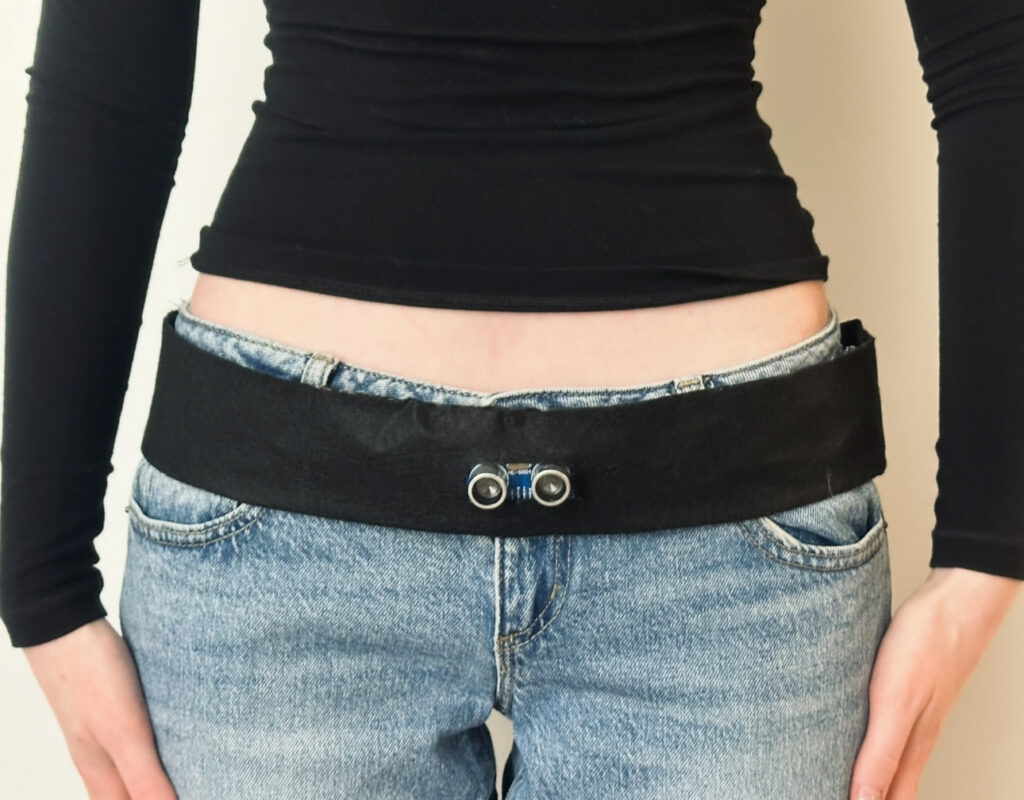
Navigate: Feel Your Way Forward is a somatic design project developed across SDP1 and SDP2, focused on creating an accessible navigation belt that helps users detect obstacles through vibration and sound. In SDP1, we established the core concept and built an initial prototype that translated distance proximity into haptic and audio feedback. In SDP2, the project evolved through iterative design, focusing on improving reliability, feedback clarity, and real-world usability. The belt helps users feel their surroundings instead of relying on vision, making navigation more intuitive by turning spatial information into something you can physically sense.
Design Problem + My Role
Across SDP1 and SDP2, this project addressed a gap in accessible navigation tools, particularly the challenge of detecting upper-body obstacles and communicating proximity in a clear, intuitive way. While tools like white canes are effective, they do not always provide full spatial awareness in dynamic environments.
As the group leader, I guided the project from initial concept through to final prototype. I led the design process across both phases, including ideation, prototyping, and iteration. I was also responsible for the technical development, leading the wiring and coding of the system and integrating new components in SDP2. In addition, I organized and conducted usability testing, using feedback to guide key design improvements and ensure the project evolved in a user-centred way.
Design Process
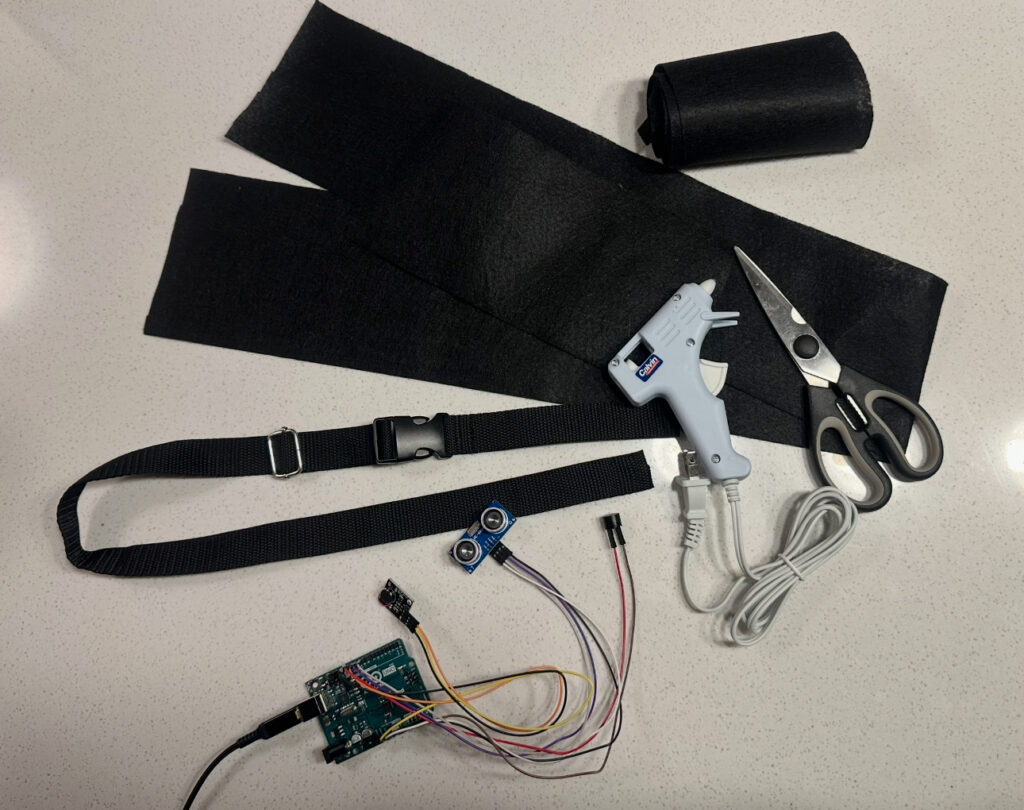
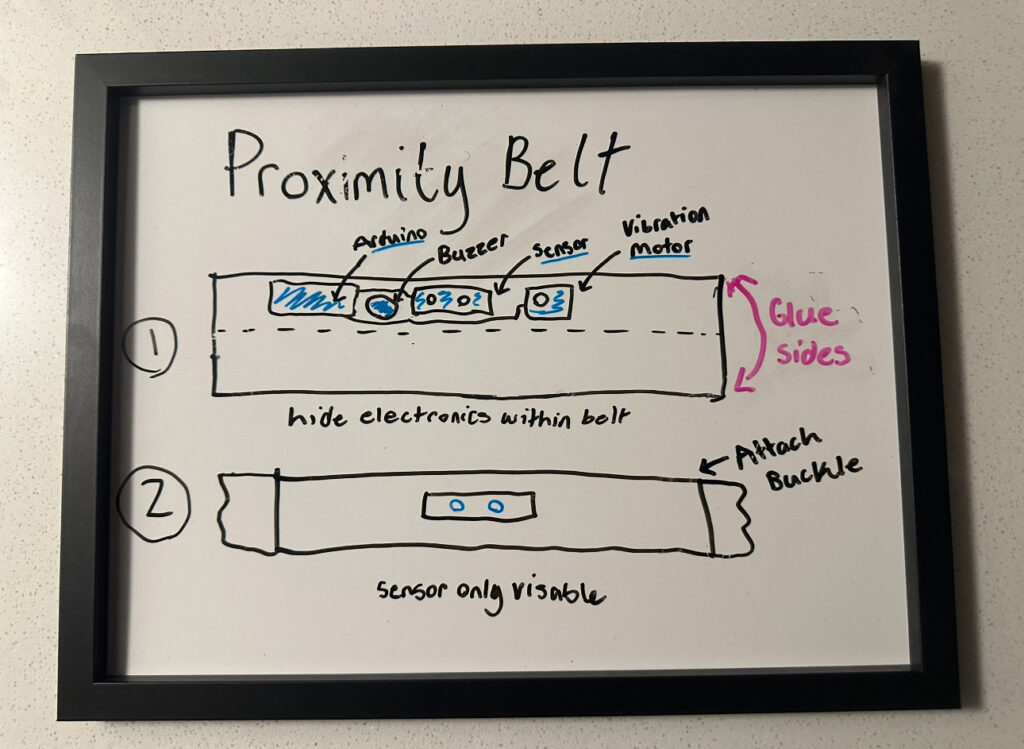
The design process followed an iterative, two-phase approach across SDP1 and SDP2. In SDP1, we focused on defining the problem, establishing design goals, and building an initial working prototype using an ultrasonic sensor, vibration motor, buzzer, and Arduino system. This stage helped us validate the core concept and understand how haptic and audio feedback could support spatial awareness.
In SDP2, the process shifted toward refinement and improvement. We began by identifying key issues from the first prototype, including inconsistent detection, delayed feedback, and limited adaptability in real-world environments. From there, we tested alternative technologies, such as a PIR sensor, which proved unreliable, reinforcing the importance of experimentation.
We expanded the system by adding a mode button, sound earpiece, and portable battery pack to improve usability and independence. A major focus was improving feedback clarity by updating the code so vibration and sound increased gradually as users approached obstacles, creating a more intuitive experience.
Final Evaluation
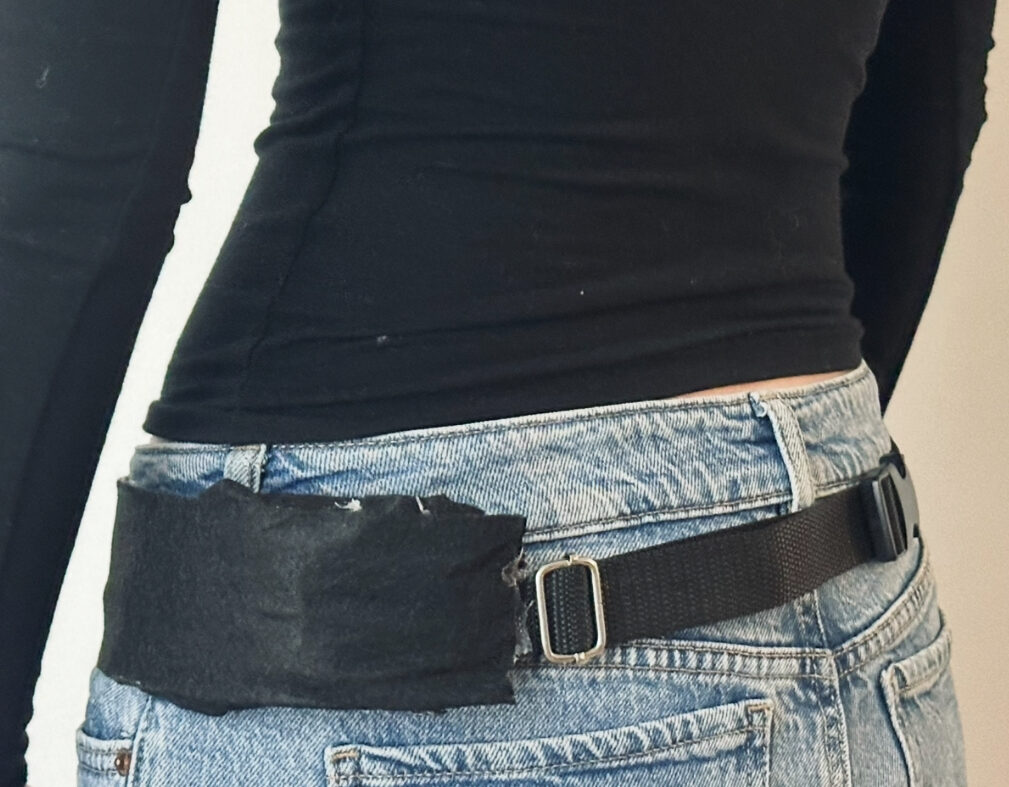
Overall, the final design demonstrates strong potential as an assistive navigation tool, particularly in how it translates environmental data into intuitive sensory feedback. Compared to SDP1, SDP2 significantly improved responsiveness, wearability, and user control, resulting in a more practical and refined system.
However, challenges with sensor reliability, limited detection coverage, and environmental adaptability remain. While technologies like LiDAR could improve accuracy, they were not feasible within the project’s constraints.
This project highlighted the importance of iteration, user feedback, and balancing technical feasibility with user experience, developing my growth as a UX designer.